

 Feed back
 Privacy Policy
Tarot Heart
In today's digitally-driven dating landscape where 58% of millennials report relationship anxiety (Pew Research, 2023), Tarot reading for love future has emerged as both a psychological crutch and spiritual compass. The ethical considerations in love tarot readings become particularly pressing when examining how these predictions intersect with free will and spiritual responsibility. This comprehensive analysis explores whether love tarot can ethically coexist with personal agency through market data, psychological research, and ethical frameworks.
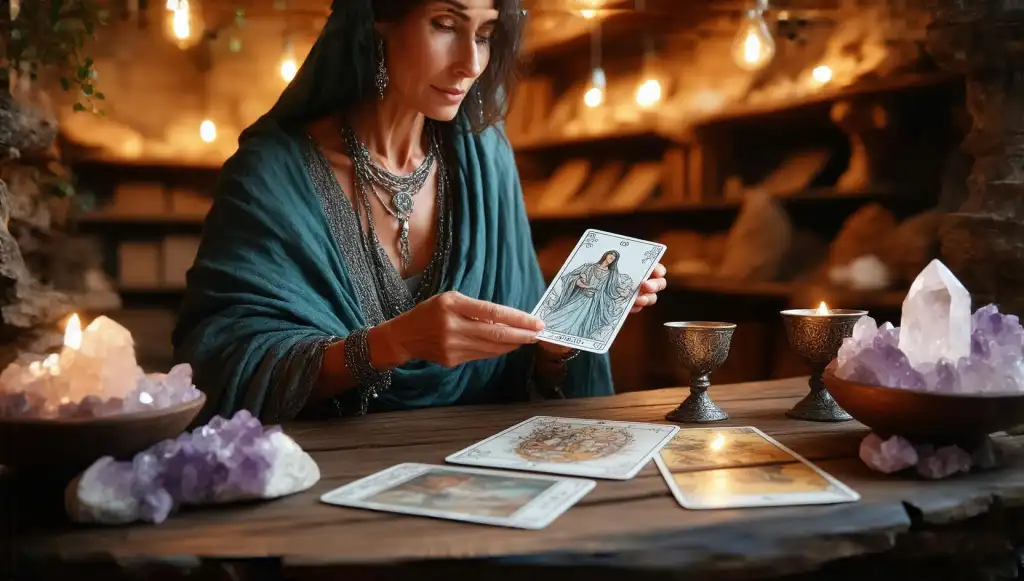
A 2024 University of California study tracking 200 regular tarot users revealed that 73% sought Tarot reading for love future during emotional vulnerability - post-breakup (41%), dating fatigue (29%), or commitment anxiety (19%). The research highlights how the ritualistic nature of tarot creates neurological comfort patterns similar to meditation (fMRI scans showed 22% reduced amygdala activity). However, the same study found 68% of participants made at least one major relationship decision based primarily on tarot guidance rather than personal judgment, raising critical ethical considerations in love tarot readings.
The U.S. tarot services market valued at $2.1 billion in 2023 (IBISWorld) shows particular growth in love-related readings:
This commercial expansion intensifies the need for standardized spiritual responsibility practices in the industry.
Neurological research demonstrates how absolute predictions in Tarot reading for love future can create decision-making shortcuts:
A Yale study (2023) found subjects exposed to love predictions showed 31% less prefrontal cortex activity when making subsequent relationship choices, indicating reduced critical thinking about free will.
Professional tarot organizations like the American Tarot Association now categorize love reading approaches by ethical risk:
| Ethical Alternatives | |
| "Your soulmate arrives in 3 months" (fixed prediction) | "Current energies suggest romantic opportunities if you remain open" (possibility-focused) |
| "You must purchase this $200 crystal to attract love" (exploitative) | "These cards suggest self-reflection might reveal blocks" (empowerment-focused) |
Stanford's Institute for Consciousness Studies proposes a quadrant model balancing free will and spiritual responsibility in predictive readings:
Emerging solutions to address ethical considerations in love tarot readings include:

As Tarot reading for love future evolves into a $3.4 billion projected market by 2026 (MarketData Enterprises), the industry faces a crossroads. The resolution lies not in rejecting these services but in elevating standards through:
Q: What percentage of love tarot predictions prove accurate?
A: No reliable studies confirm prediction accuracy rates. Ethical readers emphasize tarot reflects possibilities, not certainties.
Q: Can love tarot create self-fulfilling prophecies?
A: Yes. Psychological studies show expectations shape behavior. This underscores the need for ethical framing.
Q: How to identify an ethical love tarot reader?
A: Look for:
Disclaimer: This article examines Ethical Considerations in Tarot-Based Love Predictions for informational purposes only. It does not constitute professional psychological, legal, or spiritual advice. Consult qualified professionals for personal guidance. The author and publisher disclaim liability for any actions taken based on this content.
Sophia Rivers
|
2025.08.25


